


My research focuses on understanding Human Cooperation. I apply experiments, field studies, and meta-analysis to test evolutionary and psychological theories of cooperation. My work addresses issues related to (a) how people think about their interdependence in social interactions, (b) how people condition their cooperation to acquire direct and indirect benefits, and (c) understanding cross-societal variation in cooperation. I am the recipient of an ERC Starting Grant (2015-2020) and ERC Consolidator Grant (2020-2025).

Paul A. M. Van Lange is Professor of Social Psychology at the VU Amsterdam, Distinguished Research Fellow at the University of Oxford, and holds a Global Professorship at the University of Cologne. His research focuses on human cooperation and trust, including empathy, fairness, conflict and aggression, as well as broad societal topics such as climate change, norm violations, and refugees. He gives annual workshops to mayors and other professionals in the Netherlands and Europe.

I am a theoretical biologist working at the interface between mathematical modelling and evolutionary biology, and joined the Amsterdam Cooperation Lab in February 2023 as a Postdoctoral Researcher. The main aim of my research is to develop mathematical and computational models to understand the evolution of cooperation. In particular, I investigate how the ability to infer interdependence in social interactions (e.g., the degree of power asymmetry or conflict of interest) can facilitate the emergence of cooperative behavior.

Jing Lin
My research focuses on understanding how culture relates to individual cooperative behaviors. I use a variety of methods in my work, including cross-societal diary studies, longitudinal designs, and surveys, to test cultural and evolutionary theories of cooperation. Specifically, I examine (a) how interdependence and cooperation vary across nations with different levels of collectivism and relational mobility; (b) how societies differ in their punitive responses to norm violations; and (c) how perceived interdependence with others influences cooperative behavior. My work aims to advance our understanding of the cultural dynamics of cooperation and contribute empirical insights to promote cooperation on a global scale.

My research mainly focuses on children’s development of prosocial behavior in everyday situations, using an interdisciplinary approach. I am fascinated by how children learn to interact with those around them to create long-lasting social bonds. As considerate gestures can shape our relationships with others already at a young age, I am interested in studying at what age and under which circumstances children appreciate considerate acts of their peers and behave considerately themselves.

My general research interests are social value orientation, prosocial behavior, and its less-studied counterpart—hate. I am always willing to apply both quantitative and qualitative methods to understand important social phenomena, psychological mechanisms, and potential societal implications. For example, I incorporated unsupervised text analyses and experiments to study the impact of interpersonal hate. I also used survey studies to examine the development of social value orientation and how people with different orientations behave in diverse situations.
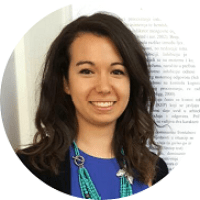
My research interest focuses on understanding (a) which social cues and evidence affect inferences individuals make about their social partners, especially in the domain of trust and cooperation, (b) how can these information be used to predict, faciliate or/and optimize partner selection, (c) how other contextual variables (i.e. interdependence, social distance) contribute to shaping cooperative behavior. In my studies, I want to apply an interdisciplinary approach, combining psychology, cognitive and computer science.
.

I am interested in people’s cooperative behaviors in real-world and economic games, specifically, what kind of people and under what circumstances will people behave more cooperatively. The former helps identify those people, whereas the latter helps stimulate cooperation in the applied settings. I wish to contribute to the game-based personality assessment by incorporating cooperative game tasks. In addition to experimental studies, I’m keen on learning new research paradigms like computational modeling, social network analysis, etc.
.

I am a student under the Spinoza Prize project “Understanding Language by Machines”. My research focuses on trust, explicitly investigating how robots could navigate the real world and form complicated relationships with people just like we do. My work aims to create and evaluate a computational model of trust, from a robot’s perspective towards trusting humans in collaborative tasks. For this, I apply complementary Artificial Intelligence techniques (from Machine Learning and Natural Language Processing to Symbolic Knowledge Representation).

Gulce Gunaydin
My research focuses on further developing the Cooperation Databank (CoDa), a databank that contains the literature on the field of human cooperation and allows to conduct meta-analyses on-demand. My future work in ACL will focus on writing a living meta-analytic review of research on cooperation that will be semi-automatically updated as new studies are published. Another line of my research involves collaborating with computer scientists from the Hybrid Intelligence Consortium to work on hybrid intelligence and conduct experiments on human-AI interaction.

Xiyan Song
My research focuses on climate-related norm violations and informal sanctions. Using a variety of methods, I aim to explore how individuals perceive climate-related norm violations and the extent to which sanctions promote adherence to environmental standards across diverse cultural contexts. Additionally, I examine the reputational effects on those who enforce informal sanctions. Ultimately, my work advances the understanding of environmental sustainability and the social mechanisms.
FORMER PhD STUDENTS
Simon Columbus: University of Copenhagen
Mengchen Dong: Max Planck Institute, Berlin
Fabiola Gerpott: WHU Otto Beisheim School of Management
Shuxian Jin: University of Sussex
Nils Köbis: Max Planck Institute, Berlin
Cristhian Martinez: Vrije Universiteit Amsterdam, Netherlands
Catherine Molho: Vrije Universiteit Amsterdam, Netherlands
Jan Pletzer: Erasmus Universiteit
Angelo Romano: University of Leiden, Netherlands
Niels van Doesum: University of Leiden, Netherlands
Junhui Wu: Institute of Psychology, Chinese Academy of Sciences
COLLABORATORS
Hillie Aaldering: Vrije Universiteit, Amsterdam
Brock Bastian: University of Melbourne, Australia
Bianca Beersma: Vrije Universiteit, Amsterdam, Netherlands
Robert Böhm: University of Vienna, Austria
Terence das Dores Cruz: Vrije Universiteit, Amsterdam, Netherlands
Carsten de Dreu: University of Leiden, Netherlands
Reinout de Vries: Vrije Universiteit, Amsterdam, Netherlands
Simon Gaechter: University of Nottingham
Caroline Graf: Vrije Universiteit, Amsterdam, Netherlands
Kimmo Eriksson: Märlardalen University, Sweden
Kelly Kirkland: University of Melbourne, Australia
Eleanor Lieberman: Performance Measurement and Evaluation Fellow
Annika Nieper: Vrije Universiteit, Amsterdam, Netherlands
Francesca Righetti: Vrije Universiteit, Amsterdam, Netherlands
Bela Rinderu: Brand and Cross-media scientist
Hannes Rusch: University of Maastricht, Netherlands
Giuliana Spadaro: Vrije Universiteit, Amsterdam, Netherlands
Pontus Strimling: Insitutute for Future Studies at Stockholm, Sweden
Kristen Syme: University of Leiden, Netherlands
Ilaria Tiddi: Vrije Universiteit, Amsterdam, Netherlands
Isabel Thielmann: Max Planck Institute
Joshua Tybur: Vrije Universiteit, Amsterdam, Netherlands
Evert van de Vliert: University of Groningen (Prof Emeritus), Netherlands
Olmo van den Akker: Tilburg University
Karen van Oudenhoven-van der Zee: Vrije Universiteit, Amsterdam
Piek Vossen: Vrije Universiteit, Amsterdam, Netherlands
Toshio Yamagishi: Hitotsubashi University
Mingliang Yuan: Beijing Normal University